
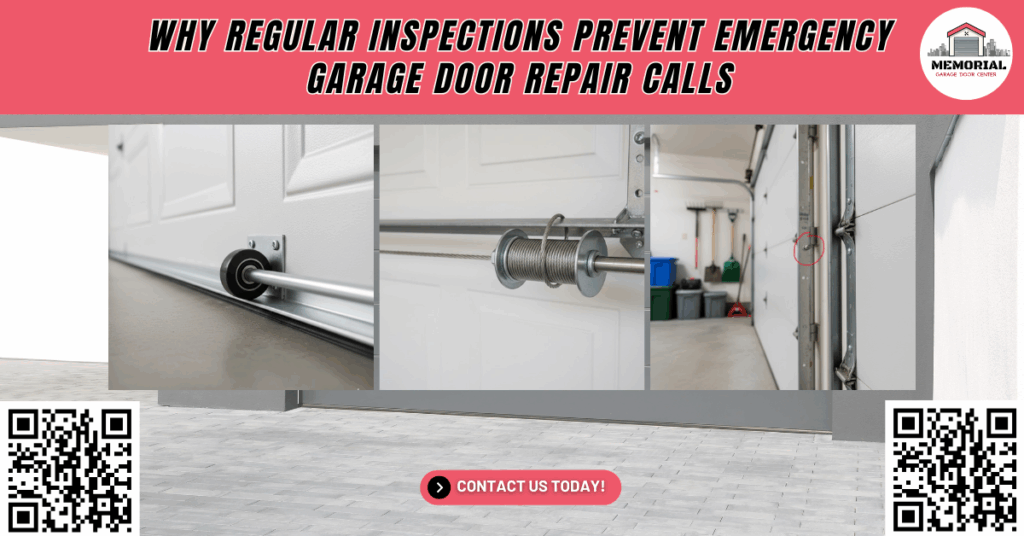
When a garage door fails without warning, the whole day can fall apart. A car may be stuck inside. A delivery may not get out on time. A business may be forced to pause operations. Many of these situations can be avoided with regular inspections and simple upkeep. That is why homeowners and business managers across Houston trust Memorial Garage Door Center for timely garage door repair and maintenance that stops small problems before they grow into emergencies.
Here is a true-to-life situation from our service routes in Houston. A homeowner noticed a little squeak and a slight shake when the door opened. It still worked, so they waited. Two months later, the torsion spring snapped when they tried to leave for work. The door became too heavy to lift. The opener strained and started to smoke. The emergency visit cost more than a standard tune-up, and the family lost half a day. A routine inspection would have spotted a weakening spring and a frayed cable long before the break.
Industry data and our internal service records tell the same story. The majority of urgent calls come from doors that have not been inspected in a year or more. Small signs like louder movement, slow starts, or a door that will not stay halfway open often point to preventable issues. A regular inspection program gives you peace of mind, extends equipment life, and cuts surprise costs.
What A Professional Garage Door Inspection Actually Covers
A garage door is a system. The door, tracks, springs, cables, rollers, hinges, bearings, drums, brackets, fasteners, weather seals, and opener must work together. A thorough inspection checks each part and how it interacts with the rest of the system.
Core checks every technician should perform
- Door balance test and lift effort
- Visual examination of torsion or extension springs for rust, gaps, or distortion
- Cable condition for frays, bird nesting, or uneven wrap on the drums
- Roller and hinge wear, flat spots, cracked housings, or missing bearings
- Track alignment, fastener tightness, and clean running surfaces
- Opener force settings and travel limits, including soft start and soft stop behavior
- Safety reversal system test with both the pressure setting and the photo eye sensors
- Weather seal and threshold condition for gaps, tears, or hardening
- Hardware torque check on hinges, brackets, and spring anchor plates
- Lubrication assessment for shafts, bearings, springs, hinges, and rollers
Why each step matters
- Balance: A balanced door protects the opener from strain and prevents premature motor failure.
- Springs and cables: These support the door’s weight. Early replacement prevents sudden breakage.
- Rollers and hinges: Smooth travel reduces noise and vibration that can loosen hardware over time.
- Tracks and fasteners: Clean, tight, and aligned tracks keep the door on course and reduce uneven wear.
- Safety systems: Proper sensor alignment and force settings protect people, pets, and property.
The Hidden Costs Of Skipping Routine Maintenance
It is easy to ignore a door that still opens and closes. The risk grows with time. When minor friction turns into major resistance, the opener compensates with more effort. Springs lose tension. Cables stretch. Bearings dry out. In the end, multiple parts fail close together.
Typical cost pattern when maintenance is ignored
- Worn rollers lead to a noisy operation
- Noise is ignored, and the opener increases force
- High force and poor balance can crack a hinge or bend a bracket
- The sudden jolt causes a cable to slip on the drum
- The door goes crooked and traps the car inside
Each item is inexpensive on its own when addressed early. Together they form an emergency that takes more time, more parts, and more labor. Regular inspections stop that chain reaction.
Safety First: What Inspections Prevent
Garage doors are heavy. Many residential doors weigh more than 150 pounds. Commercial doors can weigh several hundred pounds. A failing spring or a dropped cable can cause a door to slam down. Misaligned sensors can let a door close when something is in the way. Regular inspections prevent these hazards.
Safety systems your technician will test
- Auto reverse on contact: The door should reverse when it meets a small block of wood.
- Photo eyes: Sensors should stop and reverse the door when the beam is broken.
- Manual release: The red cord should let you lift the door by hand in an outage.
- Emergency stopping distance: Proper opener force prevents crushing pressure.
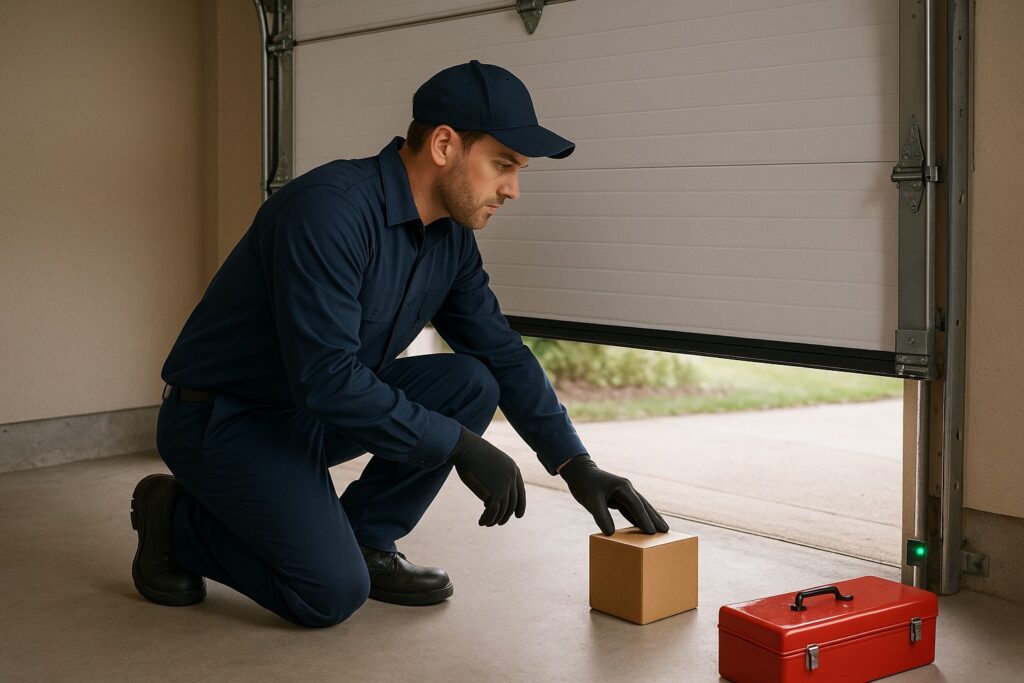
Safety checks are not only for homes. A faulty commercial garage door in a warehouse or retail bay can lead to workplace injuries or product damage. Preventive service reduces risk and protects staff and equipment.
How Inspections Extend The Life Of Your Garage Door System
A well-maintained system lasts years longer. Springs hold their rated cycle life. Bearings and rollers stay smooth. Openers do not overheat or burn out circuit boards. Panels stay aligned, and weather seals fit correctly, which protects the home or business from moisture, dust, and pests.
Life extension by component
- Springs: Correct balance and periodic lubrication reduce corrosion and friction.
- Cables and drums: Proper wrap and tension prevent kinks and unraveling.
- Rollers: Upgraded nylon rollers with ball bearings are quieter and last longer.
- Openers: Right force and travel limits protect gears, belts, and logic boards.
- Panels and hinges: Tight hardware and aligned tracks avoid cracking at hinge points.
Residential Versus Commercial: What Changes In An Inspection
The core principles are the same, but the scale and duty cycle differ.
- Residential: Daily convenience, family safety, quieter operation, curb appeal, and energy control are the focus.
- Commercial: Higher cycle counts, heavier doors, docks and gates, fire doors, rolling steel, and traffic flow are the focus. Inspections emphasize uptime, compliance, and predictable service windows that support business operations.
Our team services both. Homes in Memorial, the Heights, Rice Military, Garden Oaks, Spring Branch, and beyond benefit from quiet, balanced operation. Warehouses and retail bays throughout Greater Houston benefit from planned inspections that happen outside peak hours.
Seasonal Maintenance For Houston Weather
Houston’s heat, humidity, and storms affect garage door systems. Seasonal attention helps a lot.
Spring
- Lubricate springs, bearings, and rollers after cool, damp months
- Check weather seals for cracking and shrinkage
- Test the opener battery backups before storm season
Summer
- Recheck opener force settings because heat can thin lubricants
- Inspect photo eyes for dirt and spider webs
- Confirm attic or garage ventilation to reduce heat stress on electronics
Fall
- Clean tracks and tighten hardware after a summer of expansion and contraction
- Replace brittle bottom seals before wet weather
- Test the manual release and review storm readiness with the family or team
Winter
- Watch for stiff movement on cold mornings and reapply lubricant where needed
- Check the threshold for gaps that let in cold drafts and water
- Confirm the door stays halfway open when disconnected, which shows good balance
A Simple Homeowner Monthly Check You Can Do Safely
Some steps are safe for homeowners and facility managers. Anything involving springs, cables, or opener force adjustments should be left to trained technicians.
Five-minute monthly check
- Look and listen: Watch the door move. It should travel smoothly and sound consistent.
- Wipe and clear: Clean the photo eyes and remove items near the tracks.
- Weather seal: Check for light peeking under the bottom. Replace if you see gaps.
- Hardware glance: From a safe distance, look for loose hinge screws or missing fasteners.
- Test the sensors: Close the door and wave a long object through the beam. It should reverse.
If anything looks off, schedule a professional inspection. Small alerts now prevent emergency garage door repair later.
The Lubrication Guide Most People Never Get
Lubrication reduces friction and noise. It also slows wear and corrosion. The right product and the right amount matter.
- Use a light garage door lubricant on hinges, rollers with bearings, and the torsion spring coils.
- Wipe off extra product to avoid drips and dust buildup.
- Do not grease the track surfaces. The rollers should roll, not slide.
- If you have a chain drive opener, a tiny amount on the chain may be helpful.
- Belt drive openers usually do not need belt lubrication.
A technician will handle this expertly during an inspection.
The Balance Test And Why It Protects Your Opener
A balanced door will stay in place when lifted halfway and disconnected from the opener. If it drops or rises on its own, the springs are not balanced. An unbalanced door forces the opener to work too hard. Over time, the motor, gears, and logic board are damaged. Inspections keep the door within the correct balance range.
Noise: What Different Sounds Usually Mean
- Grinding or scraping: Misaligned track or a bent hinge.
- Thumping at the top or bottom: Travel limits or stops may be set incorrectly.
- Rapid clicking: Opener safety circuit or travel module problem.
- High-pitched squeal: Dry bearings or a roller with a flat spot.
- Boom or bang: A torsion spring may have broken. Stay clear and call immediately.
The earlier a technician hears the sound, the easier and cheaper the solution.
Photo Eyes And Force Settings: How They Keep People Safe
Photo eyes watch for obstructions near the floor. Force settings tell the opener how hard it can push before it reverses. Both must be set correctly. Too much force can damage property or hurt someone. Too little force will cause random reversals. Regular inspections keep these settings within safe limits and aligned with the door’s current balance and hardware condition.
Weather Seals, Energy Efficiency, And Clean Spaces
A tight seal reduces dust, water, insects, and hot or cold air. This protects tools, storage, and vehicles. In commercial settings, it also protects inventory and keeps conditioned air where it belongs. Inspections include seal assessments and replacement recommendations when the material is brittle or torn.
The Real Return On Regular Inspections
It is not just about avoiding emergencies. It is about the total cost over the life of the system.
- Fewer urgent calls and after-hours premiums
- Longer spring and opener life
- Lower energy loss through better sealing
- Less damage to panels and hardware
- Quieter operation that protects fasteners and structure
Many customers tell us that they avoided an emergency by paying for years of inspections.
Brands, Openers, And Smart Features We Service
We work with a wide range of door types and opener brands. That includes belt drive, chain drive, and direct drive systems, as well as wall-mount jackshaft units often used in tight garages or commercial spaces. Smart openers add app control, camera options, and alerts when the door is left open. During an inspection, we confirm that smart features work, that firmware is updated when applicable, and that safety settings match the actual weight and balance of your specific door.
What To Do When You Notice A Problem
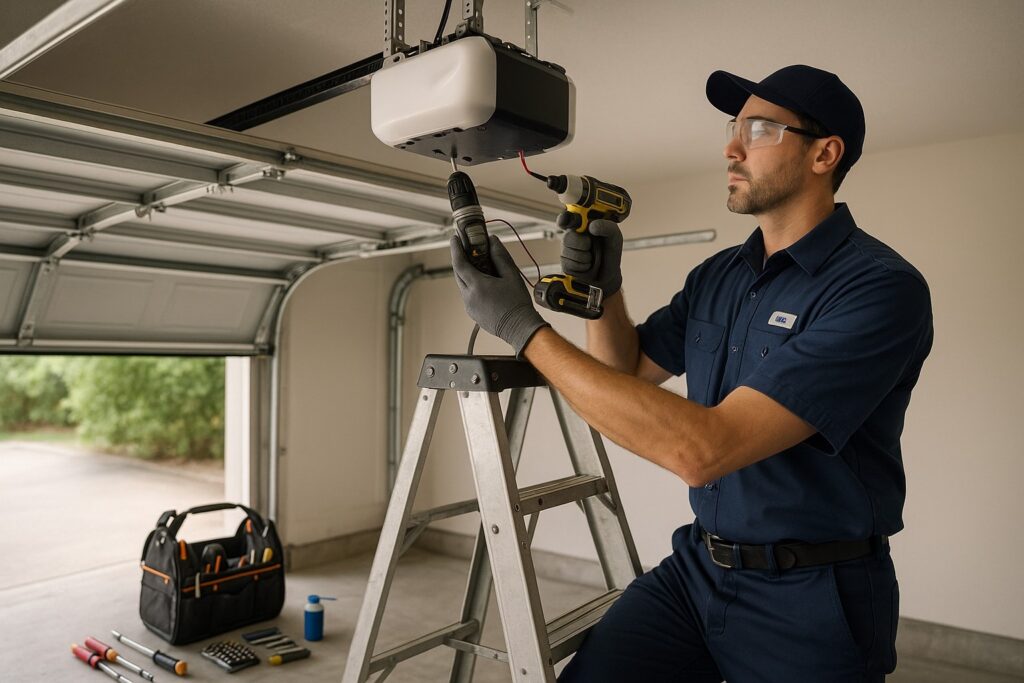
If you notice a frayed cable, a broken spring, or a door that will not stay open without the opener, do not force it. For homes, do not park under a door that looks crooked or hangs at an angle. For businesses, pause traffic through the affected bay and place a visible sign. Call for service and keep people clear until a technician arrives. A forced movement can bend panels, damage the opener, or cause the door to leave the tracks.
Your Annual Inspection And Tune-Up Plan
We recommend at least one full inspection per year for residential doors and more frequent visits for high-cycle commercial doors. If your home uses the door as the primary entrance or if a business cycles a door many times each day, a semiannual plan is smart.
What a Memorial Garage Door Center tune-up includes
- Full system inspection
- Safety testing and sensor alignment
- Balance check and spring assessment
- Lubrication of key components
- Hardware torque and track alignment
- Opener force and travel calibration
- Written notes with any recommended parts or upgrades
Real Examples Of Issues We Prevented
- Unseen cable fray: A small strand break hidden behind the drum. Replaced the cable and avoided a mid-cycle drop.
- Overtightened opener chain: Created jerky motion and noisy operation. Reset to the manufacturer’s tension and restored smooth travel.
- Cracked hinge at a center stile: Found during a routine torque check. Replaced before the panel split under load.
- Worn nylon rollers: Caused uneven movement that was straining the opener. New rollers cut the opener’s effort and noise.
Each case would likely have become an emergency. The inspection stopped it.
For Facility Managers: Build A Door And Gate Reliability Routine
Commercial doors and gates need structure and documentation.
- Keep a cycle log for high-use doors
- Assign weekly visual checks to a staff member
- Schedule quarterly or semiannual professional inspections
- Keep a labeled parts list for common wear items approved by your door vendor
- Train staff on safe manual operation and lockout procedures during outages
This approach reduces downtime and keeps loading operations smooth.
Frequently Asked Questions (FAQs)
Q1: How long does a typical professional garage door inspection take?
A standard inspection for a residential garage door usually takes between 45 minutes to one hour. Commercial inspections may take longer depending on door size, usage, and the number of entry points.
Q2: Can I still use my garage door safely if the safety sensors are misaligned?
No — if the photo-eyes are misaligned, dirty, or blocked, the auto-reverse feature may not work reliably and the door could close on a person or object. It’s wise to stop using the door and call for service until the sensors are corrected.
Q3: Does inspection service generally include replacement of worn parts, or is that a separate job?
Most inspections involve checking components and identifying wear, but replacement of parts like springs, cables, or rollers is usually a separate service. The technician will often present a parts list and quote if replacements are needed.
Q4: How soon after an inspection should I schedule the next one?
For ordinary residential use, one inspection per year is adequate in many cases; however, for heavily-used doors, commercial settings, or doors exposed to harsh conditions, scheduling inspections every 6 months—or sooner if you hear odd noises or detect balance issues—is advisable.
Final Thoughts
Emergency garage door repair calls are stressful. Many of them can be prevented with routine inspections and regular maintenance. A short visit once or twice a year keeps springs balanced, cables safe, rollers smooth, tracks aligned, sensors accurate, and openers set to the right force. This protects people and property, lowers long-term costs, and keeps your home or business running smoothly.
If you notice new noises, a door that moves unevenly, or sensors that act up, do not wait. A quick check today prevents a sudden failure tomorrow. Regular inspections are one of the smartest investments you can make in the safety and reliability of your garage door system.
How Can Memorial Garage Door Center Help You?
Memorial Garage Door Center is your trusted partner for inspections, garage door repair, installation, and maintenance services in Houston and the surrounding areas. Our expert team brings years of experience, precision workmanship, quality parts, and clear communication to every job. We service residential and commercial doors, openers, and gates, and we tailor maintenance plans to your exact needs.
Address: 2417 Sabine St, Houston, TX 77007, United States
Phone: (281) 720-3113
Contact us today to schedule a thorough inspection or a convenient tune-up appointment. Ask us any questions about your door, opener, safety sensors, parts, and regular maintenance. Our skilled technicians will arrive prepared, respect your time, explain the condition of your system, and do the job the right way so your door operates safely, quietly, and reliably day after day.
- Why Regular Inspections Prevent Emergency Garage Door Repair Calls
- What to Expect from Automatic Garage Doors Experts in Houston, TX
- What to Expect from a Garage Door Opener Repair Service in Houston, TX
- What to Expect from a Garage Door Tune-Up Service in Houston, TX
- Houston, TX Garage Door Maintenance: Affordable Solutions for Your Garage Door System